

An SB 326 inspection is a recurring safety evaluation of qualifying exterior elevated elements at a California condominium project with three or more attached multifamily units. A licensed structural or civil engineer or architect inspects a random, statistically significant sample of association-maintained wood-supported balconies, decks, stairs, walkways, and railings more than six feet above ground.
What is SB 326?
SB 326 added Civil Code section 5551 to California’s Davis-Stirling Common Interest Development Act. The law requires the board of a condominium association to arrange periodic visual inspections of qualifying exterior elevated elements, commonly called EEEs, for which the association has maintenance or repair responsibility.
The purpose is to determine whether those components are generally safe and performing according to applicable standards. The inspection looks at both the load-bearing components and the waterproofing systems that protect them from water intrusion.
Use the exterior elevated element inspection guide for a broader explanation of EEE terminology.
Who needs an SB 326 inspection?
The statewide requirement applies when all of the following are true:
- The property is a condominium project governed by an association.
- The building contains three or more attached multifamily dwelling units.
- The association is responsible for maintaining or repairing the exterior elevated elements.
- The qualifying element extends beyond the building’s exterior walls.
- Its walking surface is more than six feet above ground.
- It is designed for human occupancy or use.
- Its load-bearing components are supported in whole or substantial part by wood or wood-based products.
A detached single-family association without qualifying attached multifamily buildings does not fall within this section merely because it is an HOA. Likewise, an apartment property that is not a condominium project generally follows SB 721. Property classification and maintenance responsibility should be confirmed from the governing documents and project records.
SB 326 requirements at a glance
- First inspection deadline for existing covered projects: Jan 1, 2025. That deadline has passed.
- Repeat cycle: At least once every nine years, coordinated with the reserve study inspection.
- Newer buildings: For projects with a building-permit application submitted on or after Jan 1, 2020, the inspection is generally due no later than six years after the certificate of occupancy.
- Inspector: A California-licensed structural or civil engineer or architect.
- Sample: A random and statistically significant sample designed for 95% confidence with a margin of error no greater than plus or minus 5%.
- Report: Signed or stamped, presented to the board, and incorporated into the reserve study.
- Record retention: Two inspection cycles.
- Local authority: Association rules and local ordinances may impose stricter requirements.
Who can perform an SB 326 inspection?
Civil Code section 5551 limits the inspection to:
- A California-licensed structural engineer.
- A California-licensed civil engineer.
- A California-licensed architect.
Contractors and general home inspectors are not listed as qualified SB 326 inspectors. Before engagement, the board should verify the professional license, confirm relevant experience with wood-framed exterior elevated elements and waterproofing, and understand who will sign or stamp the final report.
What counts as an exterior elevated element?
Under SB 326, the regulated exterior elevated element consists of the load-bearing components together with the associated waterproofing system.
Covered load-bearing components extend beyond the exterior wall and carry loads from decks, balconies, stairways, walkways, and railings. The walking surface must be more than six feet above ground, designed for people to occupy or use, and supported in whole or substantial part by wood or wood-based products.
Associated waterproofing includes flashings, membranes, coatings, and sealants that protect the structural components from water. This is important because visible surface wear may be minor while concealed moisture has already affected the framing below.
How does the SB 326 sampling process work?
SB 326 does not use SB 721’s fixed 15% sample. Before the first visual inspection, the inspector generates a random list containing the locations of each type of association-maintained EEE. The inspection then follows that list and evaluates a statistically significant sample.
The statute defines that sample as sufficient to provide 95% confidence that the results reflect the whole, with a margin of error no greater than plus or minus 5%. The resulting number varies with the size and mix of the project; it should not be advertised as a universal percentage.
If the inspector sees evidence that water or water vapor may have entered the waterproofing system, the inspector may broaden the evaluation using professional judgment.
What happens during an SB 326 inspection?
A well-organized inspection usually includes the following steps.
1. Scope and responsibility review
The association and inspector review governing documents, available plans, prior reports, repair history, reserve studies, and the elements for which the association is responsible.
2. EEE inventory and random list
The inspector identifies each EEE type and generates the required random list.
3. Visual evaluation
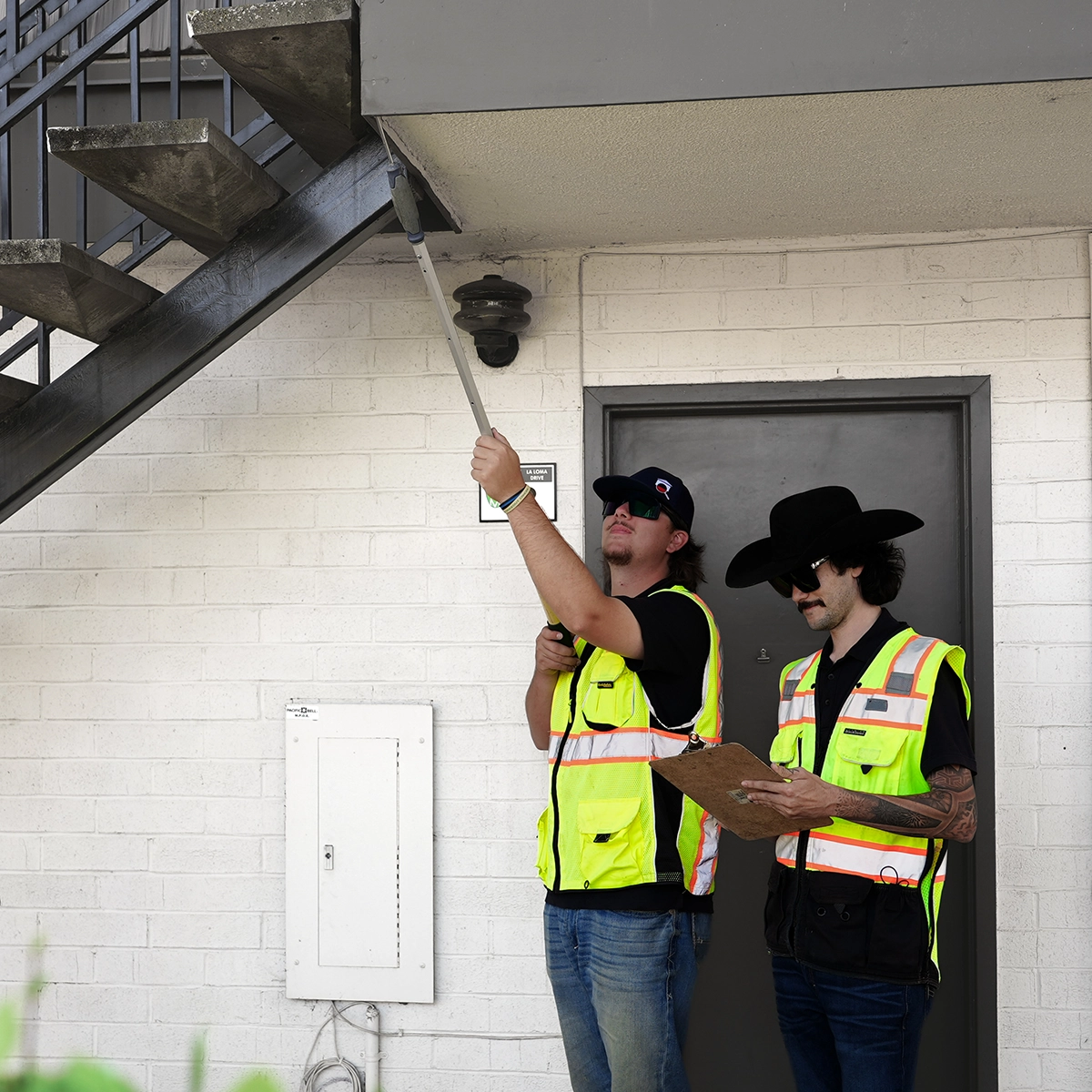
The inspection uses the least intrusive method necessary. It may involve visual observation alone or observation with tools such as moisture meters, borescopes, or infrared technology when appropriate.
4. Further inspection when warranted
Evidence of unintended moisture entry or other concerning conditions may justify a broader or more intrusive investigation. The licensed professional determines the necessity and scope.
5. Written report
The inspector signs or stamps the report and presents it to the board.
What must an SB 326 inspection report include?
The report must identify and evaluate the load-bearing components and associated waterproofing. It includes:
- The current physical condition of the components.
- Whether any condition presents an immediate threat to resident health and safety.
- Expected future performance and remaining useful life.
- Recommendations for necessary repair or replacement.
- The inspection date.
- The total number of units in the condominium project.
- The number of units with EEEs.
- The total number of EEEs.
- The number of EEEs inspected.
- The number of inspected EEEs identified as immediate safety threats and the number of units affected.
- Certification that the inspector evaluated a random, statistically significant sample.
The report must be signed or stamped, presented to the board, and incorporated into the reserve study required by Civil Code section 5550.
What happens if the report finds an immediate safety threat?
If an inspected element poses an immediate threat, the inspector must provide the report to the association immediately after completing it and to the local code-enforcement agency within 15 days.
The association must take preventive measures immediately. Those measures include preventing occupant access until repairs have been inspected and approved by the local enforcement agency.
For non-emergency recommendations, the board should work with the inspecting professional, legal counsel, reserve-study professionals, the appropriate licensed contractor, and the local agency to define the repair, permitting, funding, and closeout plan. Civil Code section 5551 does not create SB 721’s universal pair of 120-day repair deadlines, so those timelines should not be copied into an SB 326 article as a statewide rule.
North American Construction Services handles the inspection process. For repair scopes in the Sacramento region, boards can separately review Good Life Construction’s SB 326 compliance repair service. Good Life Construction is a sister company and a separate licensed contractor; the board remains free to choose any qualified contractor and should follow the inspecting professional’s recommendations.
What are the penalties for missing SB 326?
Civil Code section 5551 makes the association responsible for compliance and permits local agencies to recover enforcement costs. It does not state the same fixed $100-to-$500-per-day civil-penalty schedule found in SB 721.
That distinction matters. An HOA may still face local enforcement, emergency access restrictions, repair costs, member disputes, transaction complications, or legal exposure, but the consequences should be described based on the actual facts and governing law—not by importing SB 721’s penalty language.
The first deadline passed. What should an HOA do now?
The first statewide deadline was Jan 1, 2025. A covered association without a compliant report should act promptly:
- Confirm that the project and association-maintained elements are covered.
- Review governing documents to confirm maintenance and repair responsibility.
- Engage a licensed structural or civil engineer or architect.
- Provide prior reports, plans, reserve studies, repair records, and leak history.
- Coordinate access and resident notices.
- Act immediately on any safety restriction or emergency recommendation.
- Incorporate the report into reserve planning and retain it for two inspection cycles.
New buyer disclosure rule
Effective Jan 1, 2026, Civil Code section 4525 requires a seller of a separate interest to provide a prospective purchaser with the report from the most recent inspection conducted under section 5551 as part of the transfer-disclosure documents.
For HOA boards and managers, that makes clean recordkeeping even more important. The association should be able to locate the latest report and related repair documentation promptly. Condo buyers should read the report, note its date, compare findings with completed repairs and reserve funding, and ask qualified professionals about unresolved recommendations.
SB 326 vs. SB 721
| Comparison point | SB 721 | SB 326 |
| Applies to | Qualifying apartment and other non-condominium multifamily buildings with three or more units. | Qualifying condominium projects with three or more attached multifamily units when the association is responsible for the elements. |
| Responsible party | Building owner. | Association board. |
| Sampling method | At least 15% of each type of qualifying exterior elevated element. | A random, statistically significant sample designed for 95% confidence with a margin of error no greater than ±5%. |
| Inspection cycle | Every six years. | At least once every nine years. |
| Qualified inspectors | Licensed architect; licensed civil or structural engineer; certain qualified A, B, or C-5 contractors; or an accepted certified building inspector/building official. | Licensed structural or civil engineer, or architect. |
| Governing law | Health and Safety Code section 17973. | Civil Code section 5551. |
Apartment owners should read the SB 721 inspection guide.
How much does an SB 326 inspection cost?
Planning estimates for SB 326 inspections are typically $250 to $500 per inspected balcony or exterior elevated element. Full-property inspections commonly range from $3,000 to $10,000, while smaller projects may begin near $950 and large or complex projects may exceed $10,000. These figures are planning estimates, not statutory fees or guaranteed quotes.
Estimated SB 326 inspection costs by building size:
| Building size | Estimated cost |
| Small (3–10 units) | $950–$3,300 |
| Medium (11–50 units) | $3,600–$10,000 |
| Large (50+ units) | $10,000+ |
Final pricing varies based on the number and types of exterior elevated elements, building configuration, access requirements, available plans and records, travel, testing methods, and whether further investigation is needed.
SB 721 requires inspection of at least 15% of each type of qualifying exterior elevated element. SB 326 instead requires a random, statistically significant sample under Civil Code section 5551. The 95% figure is the required confidence level, not a requirement to inspect 95% of the balconies. Because the sample size depends on the project’s total inventory, an SB 326 inspection may cost more or less than an SB 721 inspection at a similarly sized property.
When comparing proposals, the board should compare scope as well as price. Look for a clear inventory method, sampling methodology, inspection tools, deliverables, turnaround time, exclusions, license information, and terms for additional investigation. For an accurate estimate, request a customized quote from a qualified SB 326 inspection provider.
How should an HOA prepare for the inspection?
- Gather the governing documents, prior inspection reports, reserve studies, building plans, permits, repair invoices, warranties, and known leak history.
- Confirm which components the association must maintain or repair.
- Prepare an inventory of balconies, decks, stairs, walkways, railings, and related waterproofing.
- Arrange access to units, courtyards, roofs, locked areas, and maintenance spaces.
- Tell residents what access is needed and when.
- Designate a board or management contact who can receive urgent findings.
- Plan how the board will handle immediate restrictions, follow-up evaluation, budgeting, permits, and repairs.
Frequently asked questions
Does SB 326 apply to every HOA?
No. It applies to condominium projects with buildings containing three or more attached multifamily dwelling units and to qualifying EEEs for which the association has maintenance or repair responsibility.
Does SB 326 require inspection of every balcony?
No. It requires a random, statistically significant sample. The sample size is calculated to meet the statutory confidence and margin-of-error standard, not a universal 15% rule.
Can a contractor perform the SB 326 inspection?
Not under Civil Code section 5551. The inspector must be a licensed structural or civil engineer or architect. A properly licensed contractor may be part of the later repair process.
How often is an SB 326 inspection required?
At least once every nine years for existing covered projects. Newer covered buildings generally begin within six years after the certificate of occupancy when the permit application falls within the statute’s newer-building rule.
Does the HOA have to keep the report?
Yes. Reports must be maintained for two inspection cycles and incorporated into the reserve-study process.
Does a condo buyer receive the report?
Under the transfer-disclosure language effective on the date stated above, the seller must provide the most recent section 5551 inspection report to the prospective purchaser as part of the required documents.
Where should an HOA start?
Review the SB 326 inspection service page, assemble the association’s property and maintenance records, and request an inspection. North American Construction Services can discuss the proposed inspection scope and reporting process.
Schedule an SB 326 inspection
If your association missed the first deadline or needs to plan its next cycle, begin with the records and a qualified professional. Review the SB 326 inspection service page and request an inspection from North American Construction Services.
